



Let’s be honest, foster mama. When someone tells you to “make time for self-care,” you probably want to laugh, cry, or throw your phone across the room.
You’re already managing school pickups, caseworker calls, court dates, visits, appointments, and a child whose big feelings can fill the whole house. Somewhere in there, you’re supposed to find an hour for a bubble bath and a journal? Most days, you can’t even find ten minutes to eat lunch sitting down.
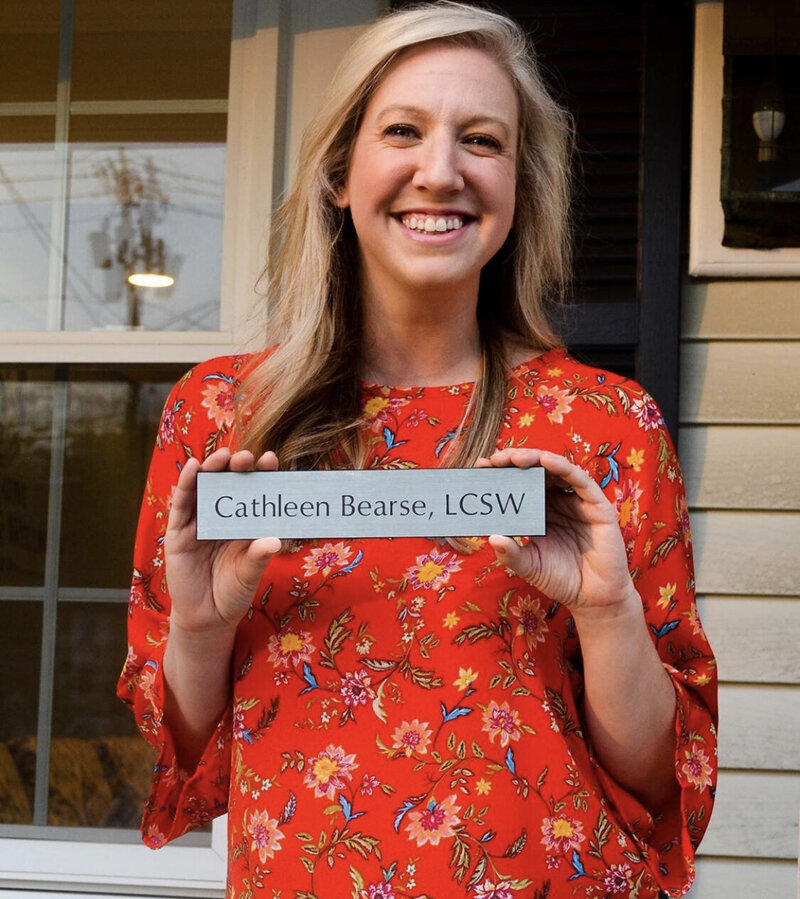
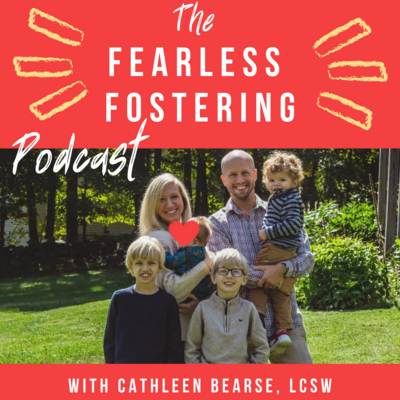
I’ve spent close to two decades as a social worker, in schools and in foster care, and I’m a foster mom myself. Here’s what I’ve learned from both sides of the couch: the mental health practices that actually work for foster parents are rarely the big, beautiful, time-consuming ones. They’re the small ones. The ones you can do in the car, in the bathroom, in the kitchen with a crying toddler on your hip, or in the ten quiet minutes after bedtime.
I recently talked about this on the How’s Your Monkey Mind? podcast, in an episode all about making mental health accessible and turning it into a daily practice instead of something you only get to when everything falls apart. That conversation stuck with me, so I wanted to put the tools into a form you can come back to whenever you need them.
This is your five-minute toolkit. Five tools, each one doable in about five minutes or less. You don’t need to do all of them. Pick the one that feels most doable today, and let that be enough.
Why Five Minutes Actually Matters
Before we get into the tools, I want to explain why tiny practices are worth your time, because I know it can feel like five minutes isn’t going to touch what you’re carrying.
Your nervous system doesn’t need a spa day to shift gears. It responds to small, repeated signals of safety. A slower breath, a feeling named out loud, your feet pressing into the floor, a kind sentence said to yourself. These tell your body that you can come down off high alert, even if only a little.
And a little, repeated often, adds up. Think of it like brushing your teeth. No single brushing session changes your oral health, but the daily habit does. Mental health works the same way. A five-minute reset practiced regularly does far more than a big self-care weekend you never get around to scheduling.
There’s another reason this matters for us specifically. Foster parenting asks you to be regulated for kids who are often dysregulated. Many of our children have experienced trauma, loss, and unpredictability, and their nervous systems are on the lookout for danger. When they melt down, shut down, or push you away, it can set off your own stress response. If you’re running on empty, it’s so much harder to be the calm, steady presence they need.
So these tools aren’t just for you. But they are for you first. You are allowed to be a person with needs, not only a person who meets everyone else’s.
Tool #1: The Long Exhale (1 Minute)
If you only try one thing from this post, make it this one.
When we’re stressed, our breathing gets fast and shallow, which tells our body that something is wrong. A long, slow exhale does the opposite. It activates the part of your nervous system responsible for calming down.
How to do it:
- Breathe in through your nose for a count of four.
- Breathe out slowly through your mouth for a count of six to eight, like you’re blowing out a candle in slow motion.
- Repeat for one minute, or about five to six rounds.
The key is that your exhale is longer than your inhale. That’s what sends the “we’re okay” signal.
When to use it: In the car before you walk into the house after a hard day. In the hallway before you respond to a meltdown. While you’re on hold with the agency. Before a visit, a court hearing, or an IEP meeting. No one can tell you’re doing it, which is the beauty of it.
Try this tonight: Do one minute of long exhales while you wait for the kettle to boil or the microwave to finish. Notice how your shoulders feel afterward.
Tool #2: Name It to Tame It (2 Minutes)
Here’s a therapist favorite that’s also incredibly simple. When you put words to what you’re feeling, the intensity often eases. Giving a feeling a name moves some of the work from the emotional, reactive part of your brain to the thinking, reasoning part.
This works for our kids, and it works for us too.
How to do it:
Pause and finish this sentence: “Right now I’m feeling ______.” Try to get more specific than “fine” or “stressed.” Are you overwhelmed? Resentful? Grieving? Lonely? Guilty? Touched out? Worried? Proud? Relieved? Sometimes more than one is true at once, and that’s completely normal.
Then add: “And that makes sense because ______.”
For example: “I’m feeling overwhelmed, and that makes sense because I’ve had three appointments this week and no time to breathe.” Or: “I’m feeling sad, and that makes sense because I miss the little one who left last month.”
You can say it out loud, whisper it, type it in your notes app, or write it on the back of a receipt. You’re not trying to fix the feeling. You’re just letting it be seen.
A note for foster parents: Many of us carry feelings we think we’re not supposed to have. Relief when a hard placement ends. Anger at the system. Grief for a child who isn’t “ours” on paper but who lives in our hearts. Resentment about how much you give. These feelings don’t make you a bad foster parent. They make you human. Naming them without judgment is one of the kindest things you can do for yourself.
Tool #3: Feet on the Floor (1 to 2 Minutes)
When your mind is racing, grounding pulls you back into your body and into the present moment. Foster care keeps us living in “what if” and “what’s next.” What if the case changes? What if they move? What if I’m not doing enough? Grounding brings you back to right now.
How to do it:
Press your feet firmly into the floor. Feel the weight of your body in the chair or against the counter. Then look around and quietly notice:
- 5 things you can see
- 4 things you can feel (your shirt, the cool counter, your feet in your socks)
- 3 things you can hear
- 2 things you can smell
- 1 thing you can taste, or one slow breath
Go slowly. The point isn’t to do it perfectly. It’s to give your brain something concrete to focus on besides the spiral.
When to use it: When your thoughts are racing at 2 a.m. In the middle of a stressful phone call. In the grocery store when your child is melting down and you can feel everyone’s eyes on you. If five-four-three-two-one feels like too much, simply press your feet into the ground and name three things you see. Even that counts.
Tool #4: The Hand-on-Heart Pause (1 Minute)
Most of us are far kinder to the people we love than we are to ourselves. We’d never talk to a friend the way we talk to ourselves after a rough day.
Self-compassion isn’t self-indulgence or letting yourself off the hook. Research on self-compassion consistently links it with greater resilience and less burnout, and it’s something you can practice in under a minute.
How to do it:
Place one hand over your heart, or anywhere that feels comforting, like your belly or your opposite arm. Feel the warmth of your hand. Then say to yourself, silently or out loud:
- “This is really hard right now.”
- “I’m not the only one who feels this way.”
- “May I be as kind to myself as I’d be to a friend.”
If those words feel awkward, use your own. “I’m doing my best, and my best is enough for today” is one of my personal favorites.
This tool is especially powerful after the moments we replay on a loop: the day you lost your temper, the thing you said that you wish you could take back, the nagging fear that you’re failing. Repair with your child, and repair with yourself. You can do both.
Tool #5: The Bedtime Brain Dump (5 Minutes)
You finally get the kids down. The house is quiet. And your mind starts running through everything: the form that’s due, the caseworker email you haven’t answered, the worry about tomorrow’s visit.
Instead of letting those thoughts circle while you try to fall asleep, give them somewhere to go.
How to do it:
Grab a piece of paper or open a note on your phone. Set a timer for five minutes and write down everything on your mind, with no organizing and no editing. Appointments, worries, to-dos, random thoughts, all of it.
When the timer ends, circle the one or two things that actually need attention tomorrow and write them at the top. Then close the notebook. You’re telling your brain, “It’s written down. I’ll handle it in the morning. You can rest now.”
This small ritual can reduce the mental load that keeps us up at night, and it gives you a clear starting point for the next day instead of a foggy sense of dread.
How to Make It Stick (Without Adding to Your To-Do List)
The biggest mistake I see is turning self-care into one more thing to fail at. So let’s keep it simple.
Pair it with something you already do. Do your long exhales while the coffee brews. Name your feelings while you brush your teeth. Do your hand-on-heart pause when you sit down in the car before you drive home. When a new habit rides along with an existing one, it’s far more likely to stick.
Start with one. Choose the tool that felt the easiest and practice it for a week. That’s it. You can add another later.
Expect imperfect days. Some days you’ll forget entirely. Some days the tool won’t seem to work. That’s not failure. It’s information, and it’s a normal part of building any skill. You can start again at any moment.
Let your kids see it. When we model regulation, our children learn from watching us. You don’t need to make a big production of it. A simple “I’m feeling a little overwhelmed, so I’m going to take some slow breaths” shows them that big feelings can be handled, and that taking care of yourself is normal.
When Five Minutes Isn’t Enough
I want to be really clear about something. These tools are meant to support you, not to replace deeper help. Foster care is heavy work, and sometimes small practices aren’t enough, and that is okay.
If you’re feeling hopeless, numb, constantly on edge, unable to sleep or eat, or like you can’t keep going, please reach out to a therapist, your doctor, or a trusted person in your life. If you are ever in crisis or thinking about harming yourself, call or text 988, the Suicide & Crisis Lifeline, any time of day or night.
As a therapist, I’ll say this plainly: getting support is not a sign that you’re failing at fostering. It’s one of the most protective things you can do for yourself and for the children in your care. You deserve to be cared for, too.
You Deserve to Be Held, Too
Foster mama, you spend so much of your energy holding everyone else: the children, the case plan, the relationships, the questions without answers. Five minutes won’t fix everything, but it can remind you that you’re still in there, a whole person worth tending.
So here’s your invitation. Pick one tool today. Just one. Try it before bed, in the car, or in the bathroom with the door locked. And notice what shifts, even if it’s small.
If you want to hear more about making mental health a daily practice, you can listen to my conversation on the How’s Your Monkey Mind? podcast, “Making Mental Health Accessible with Social Worker Cathleen Bearse,” on Apple Podcasts. And if you’re looking for more support on your foster care journey, you can find everything I offer at stan.store/fearless_fostering.
You’re doing something hard and holy, and you don’t have to do it alone.
With you in it,
Cathleen







+ show Comments
- Hide Comments
add a comment